- by
- 2026-08-05 09:29:43
-

-
-
Loading
Loading
Loading
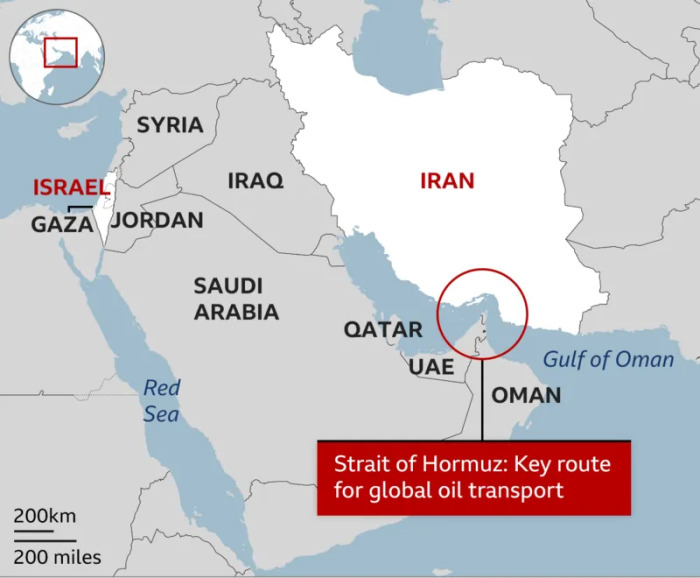
On one side is the Persian Gulf, on the other is the Gulf of Oman. The narrow 21-mile waterway between the two is called the Strait of Hormuz - the heart of West Asian trade. The sea that touches Mumbai in the east is the Arabian Sea, which merges with the Gulf of Oman in the west through Hormuz. As a result, although it is not visible on the primary map of India, Hormuz is not very far away. When Hormuz is in crisis in the war situation in West Asia, it has an expected impact on India as well.
Eight countries are directly involved in the Strait of Hormuz. One of them is Iran. On February 28, the joint forces of the United States and Israel attacked Iran, and in that attack, Iran's supreme religious leader Ayatollah Ali Khamenei was killed. After that, Iran began to retaliate by targeting US bases in West Asia. On March 4, it declared "complete control" over Hormuz. It warned that any ship trying to pass through the strait would be attacked.
Iran has laid mines in the waters of Hormuz. Hundreds of warnings from America have not helped. So far, three commercial ships have been attacked in the Strait of Hormuz. On Wednesday, a Thai cargo ship was set on fire on its way to Gujarat. 20 people were rescued, but three were trapped inside. They are still missing. With this, the total number of ships attacked in the Strait of Hormuz has reached 13.
Iran is to the north of the Strait of Hormuz, Oman to the south. There are six other countries along the coast of the adjacent Persian and Oman Gulfs—Saudi Arabia, the United Arab Emirates, Qatar, Bahrain, Kuwait, and Iraq. Each is a crude oil mine. Oil and natural gas are exported from these countries to different parts of the world. The only export route is Hormuz. Goods are transported from oil-rich West Asia to various Asian countries, as well as Europe and America through the Strait of Hormuz. In retaliation against America and Israel, Iran has attacked this energy hub of the world. Hormuz has been rendered useless. As a result, the whole world is in trouble.
The Strait of Hormuz is about 100 miles long in total. Its width at its narrowest part is 21 miles. Although it is generally within Iranian waters, it is considered an international waterway in terms of commercial importance. In fact, the location of Hormuz has ensured Iran's dominance over it. Not only this strait, but the entire northern part of the Persian Gulf, the Gulf of Oman, and the entire area are part of Iran's borders. And the southern coast of the same part is divided into the borders of Saudi Arabia, Qatar, the United Arab Emirates, Oman, Bahrain, and Kuwait. As a result, Iran has unwritten exclusive dominance in the north. Khamenei's country is using this during the war.
In general, the Strait of Hormuz is open to any ship. Many countries use this waterway to transport goods. The Strait of Hormuz is divided into two lanes, each two miles wide. Ships come from one side to the east, and from the other side to the west. In the middle of this two-way waterway, another two miles wide section has been kept, which separates the two lanes. International law states that any country can claim control over waters up to 13.8 miles from its coast. According to this rule, both Iran and Oman are recognized as having control over the Strait of Hormuz. However, Iran is a relatively more powerful state. Therefore, its influence is greater.
One-fifth of the world's total oil passes through the Strait of Hormuz. Statistics show that last year, an average of 20 million barrels of crude and fuel oil were transported through the Strait of Hormuz daily. The Organization of Petroleum Exporting Countries, or OPEC, is made up of 12 countries, including Iran, Saudi Arabia, Iraq, Kuwait, and the United Arab Emirates. They export most of their fuel oil through the Strait of Hormuz. This oil mainly goes to Asia through Hormuz. One of the buyers of which is China, India, and Bangladesh. In addition, Qatar is one of the world's largest exporters of liquefied natural gas (LNG). They send all their products to their buyers through this channel. One-third of the world's total LNG supply passes through this channel. In total, 500 million barrels of oil and 6 million tons of gas reach Asian markets through Hormuz every month.
Before this, there was a war situation between Israel and America with Iran. But the commercial flow of the Strait of Hormuz has never been blocked. This is the first time since the 1980s that Iran has closed the Strait with some concessions. 3,000 ships travel through this Strait every month. Due to the conflict, fuel prices have increased sharply. Mineral oil has reached $ 100 per barrel (9,219 taka). Oil refineries are worried. Saudi Arabia's largest company 'Aramco' has said that if this continues, it will soon have an impact on the global economy. Despite this crisis, Iran is not giving up on Hormuz. On Wednesday, they also targeted oil tankers floating in Hormuz. Iranian military spokesman Ebrahim Zolfaghari said, "The price of oil is going to be $ 200 per barrel (about 18,500 taka). Get ready for that. We have attacked three more ships in Hormuz.'' Targeting America and Israel, he then said, ''Oil prices depend on regional security. You have ruined that.''
The Indian government is also worried about the supply of fuel. On Wednesday, the Union Petroleum Ministry said that so far the supply of mineral oil in the country is under control. Because India imports oil from at least 40 countries. The oil that comes through the Strait of Hormuz has been disrupted. However, 70 percent of the supply comes through other routes. However, there is reason to worry about natural gas. The total consumption of natural gas in India is 189 million metric standard cubic meters (MSCMD) per day. Out of this, 97.5 million MSCMD of gas is produced domestically. The rest is imported. The government said that the supply of 47.4 million MSCMD has been affected due to the crisis in West Asia. India imports 60 percent of its total demand for LPG from outside. Ninety percent of it comes through the Strait of Hormuz. Efforts are underway to increase supplies through alternative routes to deal with the situation.
.webp)